

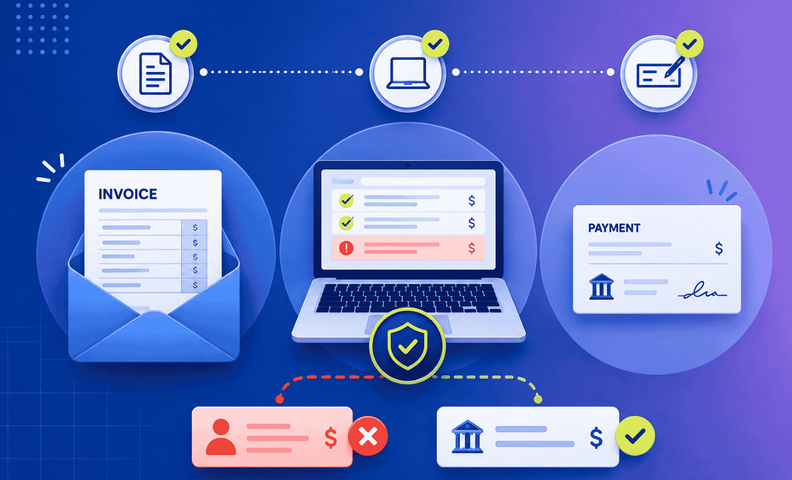
Accounts payable fraud can quietly drain hundreds of thousands of dollars from a business before anyone notices, and it's one of the most common ways small businesses get defrauded, both from the inside and out.
We've worked with companies that got hit with exactly this before they came to us: payments to fictitious vendors, billing for products never delivered, fabricated expense reports. In more than one case, the loss ran into the hundreds of thousands before anyone caught it. We've seen firsthand how it impacted clients before they uncovered it, and how close it came to putting them out of business.
The good news is: AP fraud is highly preventable once you know what to watch for and how to structure your process. This article walks through what it actually looks like, the warning signs in employees and transactions, and the internal controls that shut most of it down before it starts.
What exactly is accounts payable fraud?
Accounts payable is money your business owes to its suppliers (and creditors). It can be the result of inventory you bought on credit from a supplier, services you hired a vendor for, or simple things like utilities or rent. It shows up as a current liability on a company’s balance sheet.
Within the accounts payable function, expenses are authorized, checks are cut, credit cards are used, and wire transfers are sent. Most of the money that moves out of your business is part of your AP processes. Many early business owners handle all this themselves to keep the risk low but eventually this takes up too much of their time and they must allow others to help with this process. This puts them at risk for accounts payable fraud.
In addition, the largest expenses of a business go through accounts payable. This makes it a significant fraud risk from inside and outside your business. Accounts payable fraud is when somebody in a company or outside of it uses the accounts payable process to steal from a company.
Why AP fraud is so costly
Fraud can pose a huge threat to any company. Large and small companies alike, (although small businesses lose twice as much to fraud schemes), have faced bankruptcy and financial ruin. They have lost their reputation, employees have lost their jobs, and investors have lost their investments. All because fraud wasn’t detected in time.
According to Occupational Fraud: A Report to the Nations, the latest global fraud study from the Association of Certified Fraud Examiners (ACFE), check tampering, billing, and fraudulent expense reimbursements continue to represent some of the most significant fraud risks organizations face. Examiners found that fraud cost businesses a median amount of $104,000 per case and took a median of 12 months to be detected. The 2,402 cases studied resulted in more than $3.4 billion in total losses, with an average loss per case exceeding $1.4 million.
How to spot AP fraud
If it’s already happening, learn to identify it, and stop it. There are three key ways you can be proactive in finding fraud within your company:
1. Be mindful of your employees
Be aware of employees who aren’t happy about their work situation. If they feel like they aren’t getting the pay or recognition they deserve, they may resort to stealing from your company. Because in most cases the fraudster doesn’t have a prior record (only 4% had a prior conviction), it’s important to recognize the signs that something could be wrong.
More than 85% of AP fraud cases involve an employee who displayed one of these behaviors:
- Living beyond their means (spends more than they should with their current income)
- Unusually close relationship with vendor/customer
- Financial difficulties (recent divorce, bankruptcy, debts, gambling problems…etc.)
- “Wheeler dealer attitude” (a person who makes business deals using whatever method necessary; sometimes described as shrewd)
For fraud to occur, the three elements of the fraud triangle must be present:
Motive
This is the pressure or need that drives someone to commit fraud in the first place. Common triggers include:
- Health or personal issues increasing financial need
- Spouse loses their job
- Gambling problems
- New house that was out of their price range
Rationalization
This is the mindset that lets someone justify what they're doing to themselves:
- “I do so much for them, I’m owed this”
- “I’m just borrowing the money”
- “I never got the raise I deserved. I’m just making that right.”
Opportunity
This is the situation that actually enables the fraud, most often weak or missing internal controls.
Look for signs of any of these three things alone but actively investigate when you find situations where all three are present. Where there is smoke, there is often a fire.
2. Inspect transactions
Most AP fraud happens when an employee hides fake transactions. Some red flags that should prompt additional questions include strange transactions happening during off-hours, payments going to locations or accounts the company doesn’t normally do business in, checks for round amounts (without cents), or changes in payments to a vendor (increase in frequency or size).
3. Verify your vendors
Do regular vendor reviews to make sure all the vendors listed are vendors you have or are working with. If you don’t recognize a vendor, then it is a good idea to reach out to them (use the number or email on their website).
Check to make sure the vendor addresses are correct and don’t match any employee addresses. Check to see if any two vendors have the same contact info. Verify any local post office boxes or residential addresses. Look for new vendors that have similar names to old vendors. Often it is a good idea to scan check images as fraudsters may change the vendor name in the accounting system but write the check to themselves or a related party.
These signs alone are not usually enough to uncover AP fraud. Tips, internal audits, and management reviews are the top ways of uncovering fraud. But you know what’s even better than finding fraud? Preventing it from happening in the first place.
Prevent fraud with the ABC's of segregation of duties
Preventing fraud is your best bet. How do you do that? You can’t control the mindset of your employees and vendors, but you can implement and maintain good internal controls. Someone can be crooked in their thinking all they want but if you cut off any opportunities, they won’t be able to defraud you.
In the Report to the Nations, it was found that implementing and maintaining internal controls can reduce the chance of fraud by about 50%. They also found that a lack of good internal controls is the main reason small businesses take a bigger hit than large companies when it comes to fraud.
A key part of internal controls in the AP process is segregation of duties. And more specifically putting into practice a method we call the “ABC’s of segregation of duties”. These are:
- Authorizing: The signing of all a company’s checks and approval for all payments
- Bookkeeping: The recording of all the bill payment transactions in your accounting software
- Custody: The possession of a company’s blank checks
All these functions should be done by different people to reduce your exposure. In the end, you are trying to keep from giving someone the ability to commit fraud and then cover their own tracks. They may have a pile of company checks, but if someone else is doing the bookkeeping they can’t cover their tracks. Conversely, they may be doing all the bookkeeping, so they could cover their tracks, but they never touch the checks so they can’t steal anything.
Two ways to help your business implement the ABC’s of segregation of duties are:
- Outsourcing
- Using apps and software
Outsourcing
Small businesses often can’t afford to hire a different person to do each one of these tasks. Many small companies hire one in-house accountant or bookkeeper to do all three. That one person has the means to sign checks (authorize), record payments (bookkeeping), and have checks in their possession (custody). This gives them the perfect opportunity to commit fraud. You need different people touching this process to prevent this from happening.
One option is to outsource your business bill payment to an experienced accounting firm. This helps reduce fraud because you can involve multiple people in the process without putting them all on your payroll.
Apps and software
There are also many apps and software available to make segregation much more possible for small businesses. These apps and tools make it possible for a small business owner to authorize payments, oversee bookkeeping (verified by your own bookkeeper), and make it so you don’t even have to worry about anyone having custody of blank checks. Our favorite tools for this are Bill.com or Veem.
Bill.com: Bill.com is a cloud-based accounting solution that specializes in billing and invoicing. Users can receive client payments, pay their vendors, and handle financial reporting. It helps give owners more control over authorizing and gets rid of the need for custody (paper checks). Our review of Bill.com will tell you why we like it and why you should start using it.
Veem: Veem is a global payments network made for businesses. It helps you pay vendors and receive payments in more than 100 countries around the world. They have good customer service, so you will have help all along the way.
Frequently asked questions
What exactly counts as accounts payable fraud?
It's when someone inside or outside a company uses the AP process to steal from it, whether that's creating payments to fictitious vendors, billing for products never sent or received, or reporting fictitious expense reimbursements. It happens because so much money moves through AP: authorizing expenses, cutting checks, using credit cards, and sending wire transfers.
Does an employee committing fraud usually have a criminal record?
Almost never. Only about 4% of fraudsters had a prior conviction, which is exactly why watching for behavioral warning signs matters more than running a background check. More than 85% of AP fraud cases involve an employee showing signs like living beyond their means, financial difficulty, or an unusually close relationship with a vendor.
What is the fraud triangle?
It's the three conditions that need to be present for fraud to happen: motive (pressure like financial need), rationalization (the mindset that justifies it, like “I'm just borrowing the money”), and opportunity (weak or missing internal controls). Seeing one of these alone is a yellow flag; seeing all three together is worth actively investigating.
What are the ABC's of segregation of duties?
Authorizing, Bookkeeping, and Custody: signing and approving payments, recording transactions in the accounting software, and holding the company's blank checks. Splitting these three functions across different people means no single person can both commit fraud and cover their own tracks.
Can a small business segregate duties without hiring more staff?
Yes, through outsourcing or software. Outsourcing bill payment to an accounting firm brings in multiple people without adding payroll, and tools like Bill.com or Veem let an owner handle authorizing while the software and a bookkeeper cover the rest, without anyone ever holding a blank check.
Let us help you shut the door on AP fraud
Recognizing the warning signs is good. Building a process that makes fraud structurally difficult is better. That's exactly what happens when LedgerGurus takes over your accounts payable: segregation of duties built in, nothing leaving your account without your approval, and clean books that make anything unusual much harder to hide.
