
Article
How to Calculate & Optimize Inventory Turnover for Ecommerce Sellers
Inventory turnover is one of the clearest signals of how well you manage your biggest asset. This covers the formula, a worked example, and ways to improve it.

LedgerGurus expert
Chief Executive Officer
CPA and former CFO who sets the accounting strategy behind every client engagement
Brittany founded LedgerGurus in 2014 after seeing a need to serve small businesses and having a desire to create a flexible work environment for others like her. Brittany will say she never intended to start a company or be an entrepreneur, but she has quietly been creating things for many years.
Brittany earned a Bachelor of Science in Accounting and a Master of Accountancy from Brigham Young University. After an internship at KPMG, Brittany worked at Squire in their advisory services group, and then as the CFO for DSB Construction, before founding LedgerGurus. Brittany is a CPA and QuickBooks ProAdvisor, certified in QuickBooks Online Advanced and QuickBooks Enterprise.
In her role, Brittany drives many strategic initiatives and relationships at LedgerGurus. She also convinced Stephen, COO and husband, to ditch his software career and join LedgerGurus full-time.
Inventory turnover is one of the clearest signals of how well you manage your biggest asset. This covers the formula, a worked example, and ways to improve it.
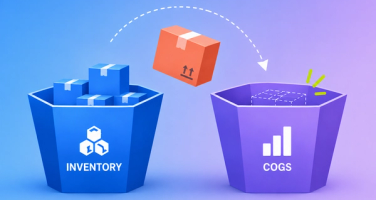
QuickBooks Online won't calculate COGS for you, but recording it right is simpler than it sounds. This covers three methods, from spreadsheets to A2X.

LedgerGurus' CEO on building a remote firm, starting from her own experience as a single mom. This covers benefits for employees, employers, and clients.
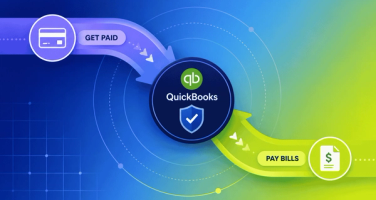
QuickBooks Payments and Bill Pay cover both sides of cash flow. LedgerGurus' CEO breaks down what each does, the benefits of using them together, and setup.
From a firm owner who's trained 150+ accountants on why Intuit's new ProAdvisor Training Manager and CAS curriculum feel like a relief, plus new firm tools.

Intuit is retiring ProAdvisor for ProPartner in early 2027. This firsthand look covers what stays the same, what's expanding, and new training and community.

LedgerGurus' CEO on why Intuit Enterprise Suite fills the gap between QuickBooks and full ERPs, and offers a gentler upgrade path than jumping too early.

LedgerGurus' CEO on hiring 150+ accountants and why colleges skip Client Accounting Services. She co-designed a CAS course at UVU and shares how it went.
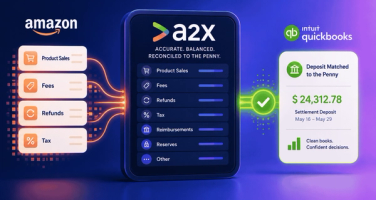
The wrong Amazon-to-QuickBooks integration means fighting your books monthly. This breaks down what separates these tools and makes the case for A2X.

Every Amazon settlement bundles sales, fees, refunds, reimbursements, reserves, and tax into one deposit, and a single settlement can span two months. Brittany Brown shares the three tests LedgerGurus uses to judge any Amazon to QuickBooks integration: it reconciles to the penny, splits settlements at month-end, and gets fixed fast when Amazon adds fees. A2X passes all three and runs behind nearly every Amazon client the firm manages. She also covers when Synder, Webgility, or the free QuickBooks connector makes more sense, and why building your own with AI turns you into an unpaid integration developer.

Multi-channel sales, COGS accounting, and sales tax compliance are three different specialties, and most growing brands cannot hire three people. Brittany Brown lays out what LedgerGurus covers, from capturing multi-channel activity and bill pay through budgeting and cash flow forecasting. Then Beddy's and Thread Wallets describe what changed for them: inventory counts that stopped being a struggle, and numbers reliable enough to build marketing budgets on.

Month end COGS turns into a scavenger hunt when your product costs live in five different places. Brittany Brown builds a product cost catalog from a single vendor invoice, starting with buy cost and layering shipping and packaging on top to reach a landed cost per unit. You see the weighted average formula she uses to allocate shipping by total price, and why these costs have to hit inventory on the balance sheet instead of being expensed.
Implementing inventory software is painful enough that plenty of sellers put it off and keep patching spreadsheets instead. Brittany Brown lays out ten problems a system actually solves: where your stock sits, what's already committed, what a SKU really costs, overselling across channels, purchase order accuracy, pick pack and ship, and profitability by SKU, order, and channel. Match those against your own list and decide whether the switch is worth it.

Invoices are easy to create and easy to ruin at the payment step. Brittany Brown walks the correct flow in QuickBooks Online, then explains what undeposited funds is actually for: grouping multiple checks into one deposit, or adjusting for processing fees so the amount matches your bank feed. Skip it and QuickBooks can't match the transaction, you code it as income instead, and you've just counted the same $300 twice.

If you want to test QuickBooks' inventory feature or try a new workflow without risking your live data, you need a sandbox with a real copy of your file. Brittany Brown shows the process: upgrade to QuickBooks Advanced, run a full backup, add your sandbox company to the backup area, then copy the backup into it. The upgrade is temporary, since the whole thing takes about an hour.

Your bank only shows summary deposits, so the real sales activity stays inside Shopify and your payment processors. Brittany Brown walks through three ways to handle that, matched to revenue: code deposits straight to sales under $250,000, add a monthly journal entry from the Shopify sales report up to $1 million, and reconcile every payment processor above that. For one large client, the method choice changed reported sales by $600,000 in a single month.

A2X matches your Amazon US deposit to a journal entry in one click. Amazon Mexico and Canada settle in pesos and Canadian dollars but deposit into your bank in US dollars, so nothing matches. Brittany Brown found the fix at 11:30 at night, after banging her head against the wall on it: turn on foreign currency in QuickBooks, then click the foreign currency option in the bank feed to surface the right settlement.

Brittany Brown calls bank feeds the single biggest time saver in your accounting, and says an accountant who hasn't turned them on doesn't know what they're doing. She walks the full setup: creating a chart of accounts entry for every bank account and card first, connecting through the banking center, mapping each account, and choosing how far back to pull. Plus why the last four digits in every account name matter more than you'd think.

Your Amazon 1099 won't match your books, and that's expected. The 1099 reports gross order totals while your accounting uses fulfilled, shipped sales net of fees, returns, and discounts. Brittany Brown shows how to prove your numbers are right anyway: pull Amazon's date range summary report, compare net income to your books with COGS added back, and expect to land within a few hundred dollars. She also covers handling international channels in foreign currency.

Good financial statements are built on a well-designed chart of accounts, and QuickBooks' automatic starter set isn't one. Brittany Brown covers the five account types and which statement each flows to, the four problems that make financials unreadable, and how to merge accounts rather than deleting them. Her core argument is that when you want more detail, class tracking is the answer, not another twenty accounts.

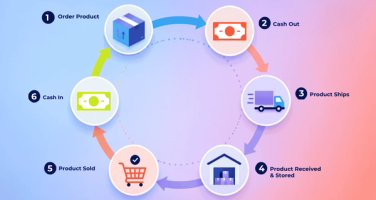
Profit and cash are not the same thing, and inventory is the reason ecommerce feels that gap harder than most. Brittany Brown walks through the cash cycle, the three types of cash flow, and the difference between the direct and indirect methods. Then she reads a real QuickBooks statement, including a month with $744,000 of net income that still drained cash, and explains why operations eventually have to fund themselves.

Your P&L shows how a period went. Your balance sheet shows where you stand right now and how close you are to trouble. Brittany Brown walks through assets, liabilities, and equity using a real ecommerce balance sheet, then shows why the current ratio can flatter you. In her example the business looks healthy at 4.39, until the quick ratio strips out a shareholder loan and prepaid expenses and leaves barely a dollar per dollar owed.

Brittany Brown calls the income statement the easiest financial statement to read, and the best place to start. She covers its five parts, then shows why recording an Amazon deposit as your sales figure hides everything that matters. The demonstration includes class tracking to see profitability by channel, which exposes an Amazon channel losing money on storage, and right sizing expenses as a percentage of income to explain why one month earned $70,000 more than a bigger one.

Most business owners started a business partly to make money, then avoid the one tool that shows whether it's working. Brittany Brown makes the case for financial literacy first, then introduces the three statements: the P&L for day to day performance, the balance sheet for what you're worth and how close you are to trouble, and the cash flow statement, which she calls the most useful and least read. She closes by showing where to find them in QuickBooks Online.

How much should you spend on marketing is one of the most common questions LedgerGurus gets, and answering it takes six numbers. Brittany Brown covers where each one comes from, works CAC and ROAS by hand, then runs a downloadable calculator that turns them into a daily profit and loss. The point of the exercise is watching what happens to net income when your margin slips or your return on ad spend drops.

Expense a shipment the month it lands and January shows a $15,000 gross loss while February and March look untouchable. Brittany Brown lays out the alternative for Amazon sellers: code inventory to the balance sheet, then release it to COGS as units actually sell. You get the two things you have to track, quantity and value by SKU, how a vendor bill becomes a product cost catalog, and why FBA can serve as your product master.

You cannot value your inventory or your COGS without knowing what each SKU actually cost you. Brittany Brown shows how to build a product cost catalog out of the bills and POs you already receive, starting with a plain Excel list of SKUs and costs. You get the difference between buy cost and landed cost, how LedgerGurus updates costs on every new invoice, and when an inventory tool is worth paying for.

Brittany Brown walks three ways to record Amazon settlements, and is upfront that the first one isn't best practice. Coding the deposit as income is fast, gives a correct net income, and is adequate under $100,000 if you only need something for your tax accountant. Breaking the settlement out by line item fixes your margins, since a $109,580 deposit actually represented $147,000 of sales. A sync tool fixes the timing problem the first two share.

Amazon pays you every two weeks, and that one deposit nets sales, FBA fees, refunds, chargebacks, shipping, and sales tax together. Coding it as income understates sales, in Brittany Brown's client example by $38,000 on a $109,580 deposit. She shows how A2X breaks a settlement into a journal entry that ties to the bank deposit, how it splits settlements that cross month end, and how to map your accounts and cost of goods sold.

Inventory accounting is hard because inventory operations are hard, and every step between the two has a failure point. Brittany Brown explains why expensing a purchase in the month you make it wrecks every month that follows, how inventory moves from the balance sheet to COGS as it sells, and what landed cost actually includes. Stephen Brown shows the same three months modelled on cash and accrual, then reads gross margin across Nike, Warby Parker, and Solo Brands to show what good looks like.

Part one of the inventory series. Inventory is an operational problem that sends you a financial bill. Karlie Lester and the Finale team work through where the chaos starts: purchasing on spreadsheets, tracking that misses every outflow except sales, and selling across channels without knowing your true cost. Brittany Brown closes with the two questions clients actually ask, and an honest answer on the cash cycle for a small brand.

Part three of the inventory accounting series. Brittany Brown, Karlie, and partners from Finale and A2X work through what belongs in COGS, what belongs in cost of sales, and why the difference decides whether your gross margin means anything. They cover the timing question of recognising COGS at sale or at shipment, the three costing methods, and where each tool fits as a business matures.

Part two of the inventory accounting series. Once you pay a vendor, you lose every bit of leverage you had. The three-way match is what gives you the confidence to release that payment: the purchase order, the receiving record, and the bill all agreeing before money moves. Brittany Brown, Karlie Lester, and the Finale team cover why the three documents usually sit with three different people, and what that costs.

Some sellers are worrying about sales tax when they do not have to, and others are ignoring an obligation that could wipe out their profits. Brittany Brown and Kexin Smith separate the two, then lay out the three guideposts: work out your nexus, decide where to register, and collect and remit. They close with the three setup mistakes clients pay thousands to unravel.
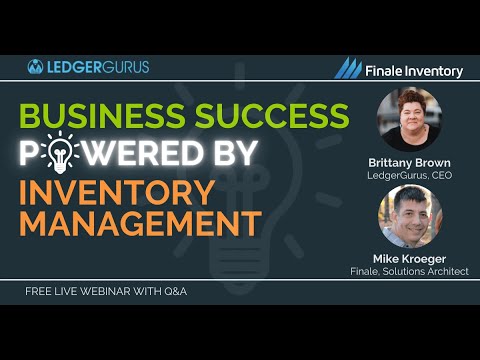
Cost of goods sold is your single biggest expense, and it's the one number spreadsheets can't keep honest. Brittany Brown makes the case for an inventory management system, from Finale's $75 entry point to the pallet her own brand lost for a year, then Mike Kroger demos the full cycle live: stock by bin, sales velocity reordering that stops overbuying, and the sync that lands bills, inventory value, and COGS in QuickBooks automatically.
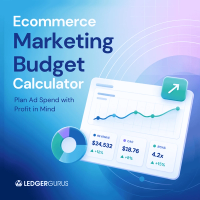
A free Excel calculator that shows how ROAS, ad spend, agency fees, and discounts flow through to your daily contribution margin and net income.

The five steps international sellers must take before applying for a US sales tax permit, from getting an FEIN to handling paper registrations.
 Stephen BrownChief Operating Officer
 Anna YoungDirector of Learning and Initiatives
 Lauren MaillardDirector of Service Delivery
We use cookies to improve your experience and to measure how our site and ads perform.Read our Cookie Policy